MDF, Melamine or Thermofoil? How to Compare Kitchen Cabinets
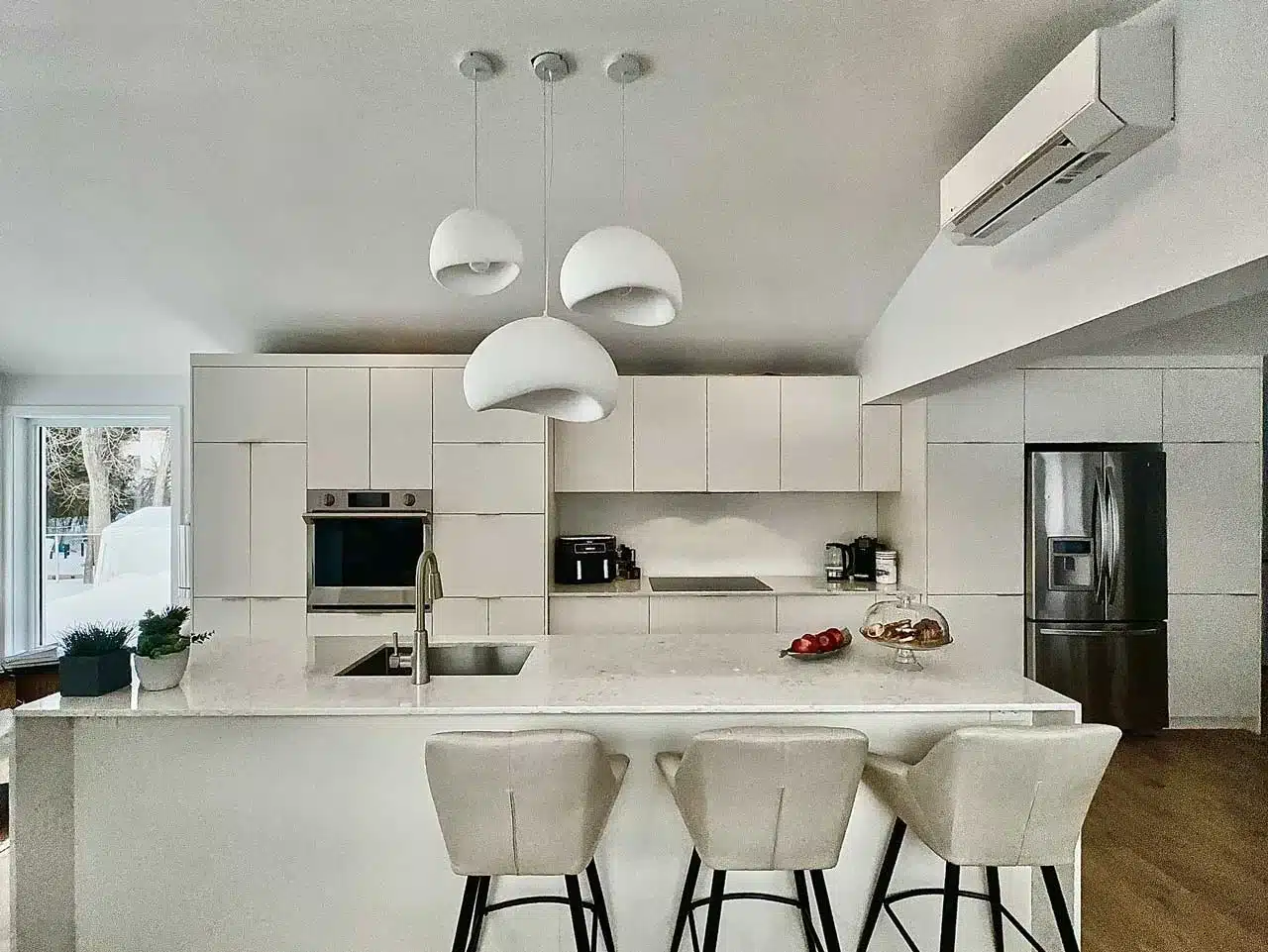
MDF, melamine and thermofoil are not three interchangeable ways to describe an entire kitchen cabinet. MDF describes a panel material. Melamine commonly describes a decorative surface on a panel. Thermofoil describes a formed film finish used on doors. A single kitchen can combine them.
The useful question is therefore: what are the boxes made from, what are the doors made from, and how are the exposed edges and moving parts finished?
Read a cabinet in layers
Start with the box, sometimes called the carcass. It holds the shelves, drawers and fittings. Next identify the door’s core or construction. Then identify the visible finish and its edges. Finally, specify the hinges, drawer runners and accessories.
Panel manufacturer Uniboard distinguishes MDF, particleboard and decorative laminated panels. This distinction matters when a quote simply says “melamine cabinets”: it has not necessarily described the door, the core and the hardware.
Our custom kitchen cabinet service considers these parts together. A door colour alone is not a cabinet specification.
MDF: ask about the finish as well as the panel
MDF can be used as a substrate for different finishes. Knowing that a front contains MDF does not tell you whether you are looking at a painted, laminated or film-covered surface.
Ask to see the front, back and edge of the proposed door. Confirm the exact product and the care instructions. If the design includes a routed profile or an integrated grip, examine that detail on a sample rather than assuming it behaves like a flat panel. Our guide to handleless cabinet opening systems compares these options.
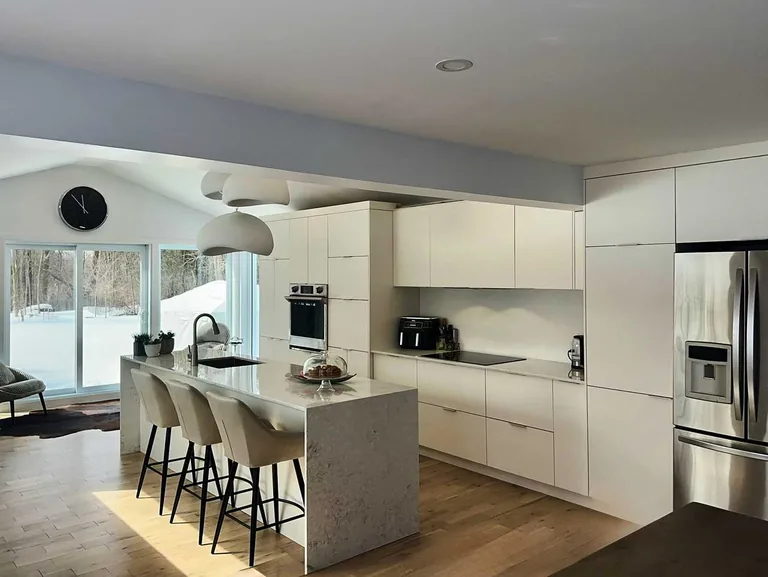
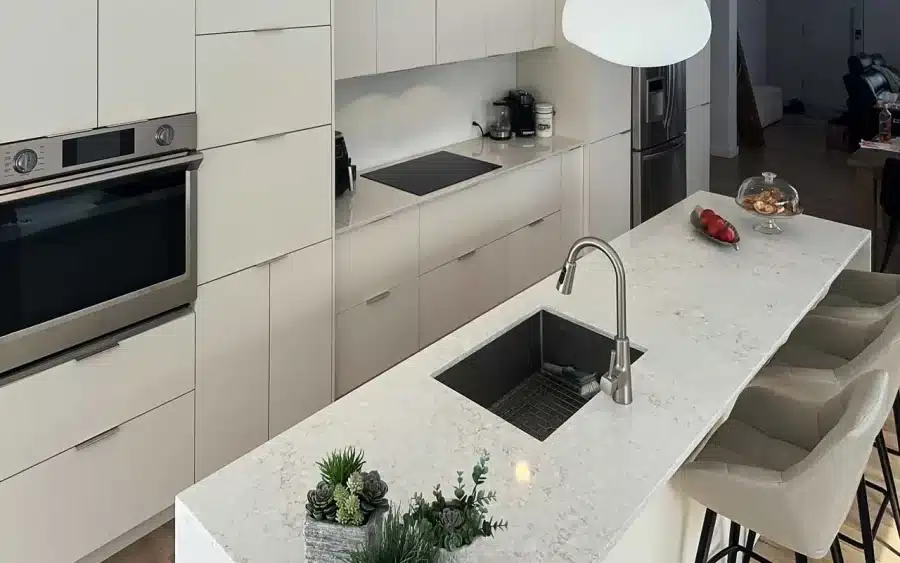
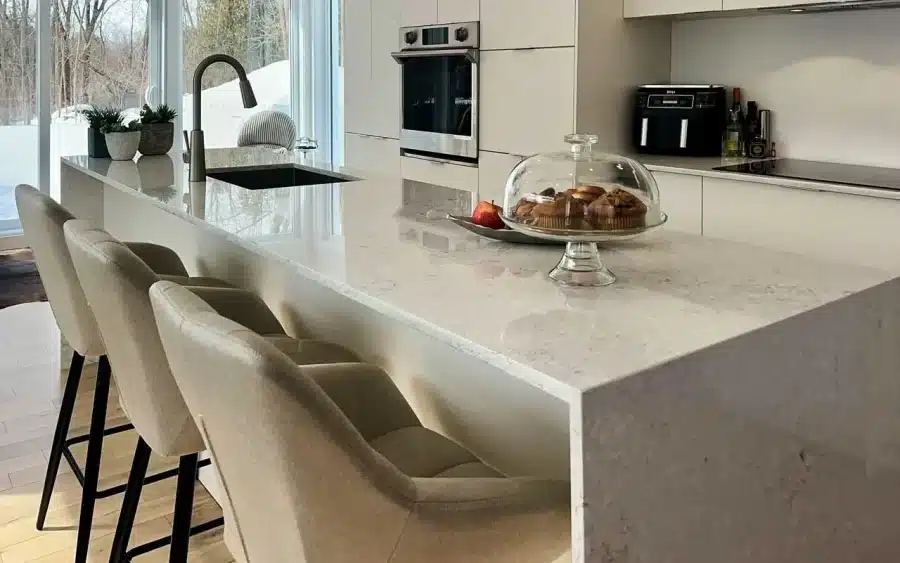
In our Laval waterfall-island kitchen, completed in 2024, the record lists matte white AGT MDF fronts and 16 mm white melamine boxes. Those are two specifications in the same kitchen, not competing descriptions.
Melamine: look beyond the colour name
A decorative melamine surface may be chosen for boxes or visible panels. Ask what substrate is used, how the edges are finished and how adjoining components match.
A convincing wood pattern does not make the panel solid wood. Equally, choosing a real wood feature does not require every hidden part of the kitchen to be solid timber. Compare the actual construction and appearance you want.
Look closely where the finish wraps or meets an edge, particularly on end panels and areas around appliances. Product specifications and installation details are more useful than a blanket claim that one material is always the most durable.
Thermofoil: a door finish within a larger design
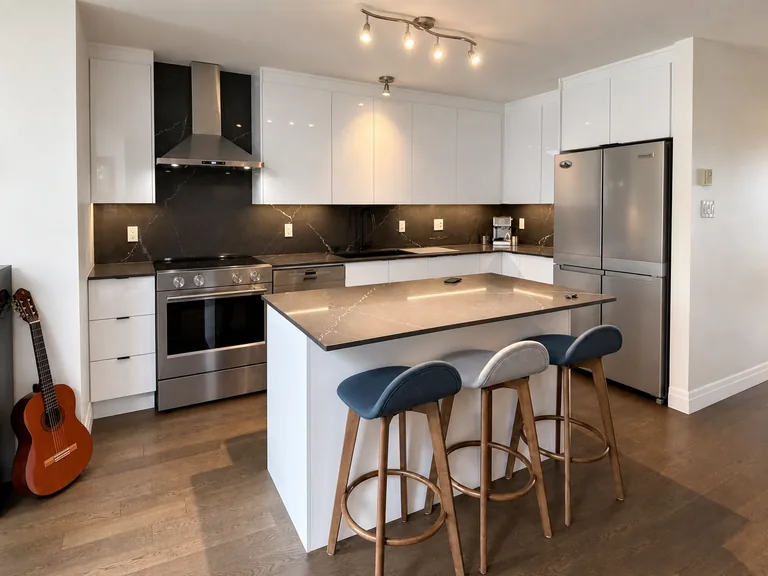
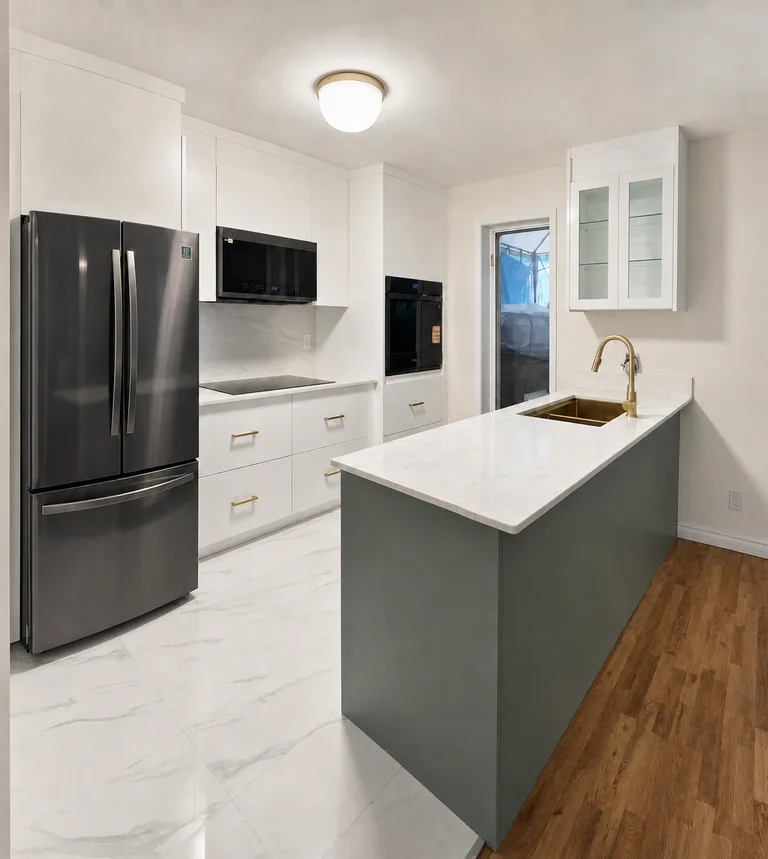
The Pointe-Claire green-and-gold kitchen uses glossy white thermofoil fronts. The project record describes a film formed over an MDF door. Its smooth surface is a visual choice as well as a construction choice.
For a proposed thermofoil door, confirm the product, edge detail and requirements near ovens and other heat sources. Ask for the manufacturer’s care and warranty documents rather than applying the same promise to every door sold under a broad label.
Wood can be one part of the composition
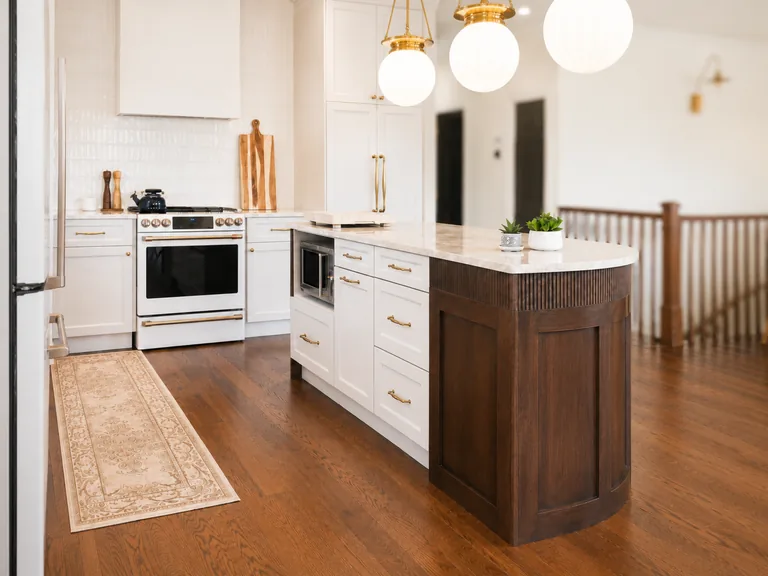
Our Terrebonne kitchen pairs Cashmere matte thermoplastic fronts with a handmade maple island and Taj Mahal quartzite. The boxes are listed as white melamine. The result is one coordinated room made from different components.
That is a more useful discussion than asking which single material should “win” the kitchen. You might want visible wood grain on one feature, a quiet solid colour elsewhere and a practical interior finish.
Compare two quotes without changing five things at once
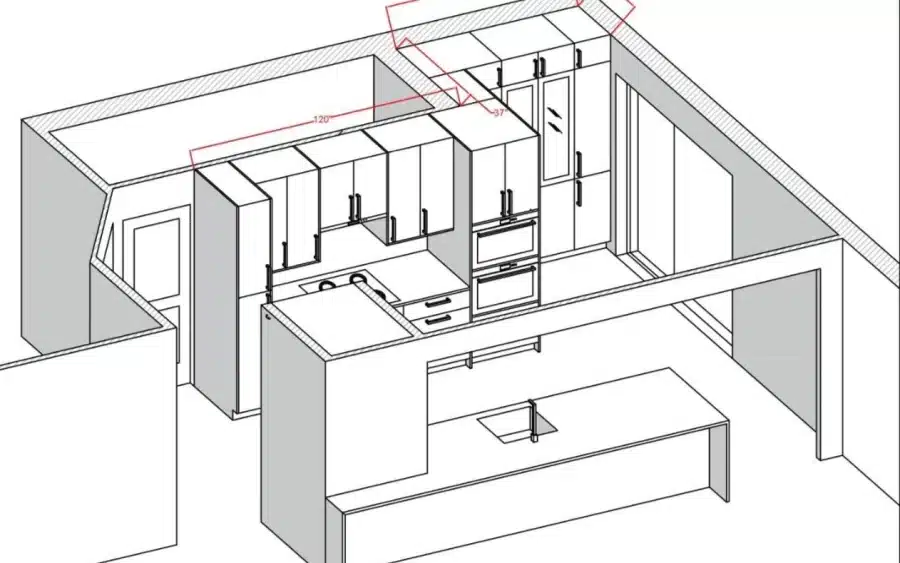
Ask for one shared layout and drawer arrangement. Keep the hardware, countertop and installation scope constant while comparing door options. Then identify the change in price and the changes in care, appearance and repair options.
Our kitchen cost guide identifies door material as a price driver. It does not establish a universal surcharge for changing every kitchen from one material to another.
Write down: box panel; door construction; finish and colour code; edge detail; hinges and slides; cleaning guidance; warranty documents. That list is short enough to use at a sample appointment. Our cabinet quality checklist adds the questions to ask at the showroom.
For a complete kitchen renovation, bring these decisions to the same discussion as layout and site work. Visit our Saint-Laurent studio or send us your project. We can compare actual specifications rather than material labels.