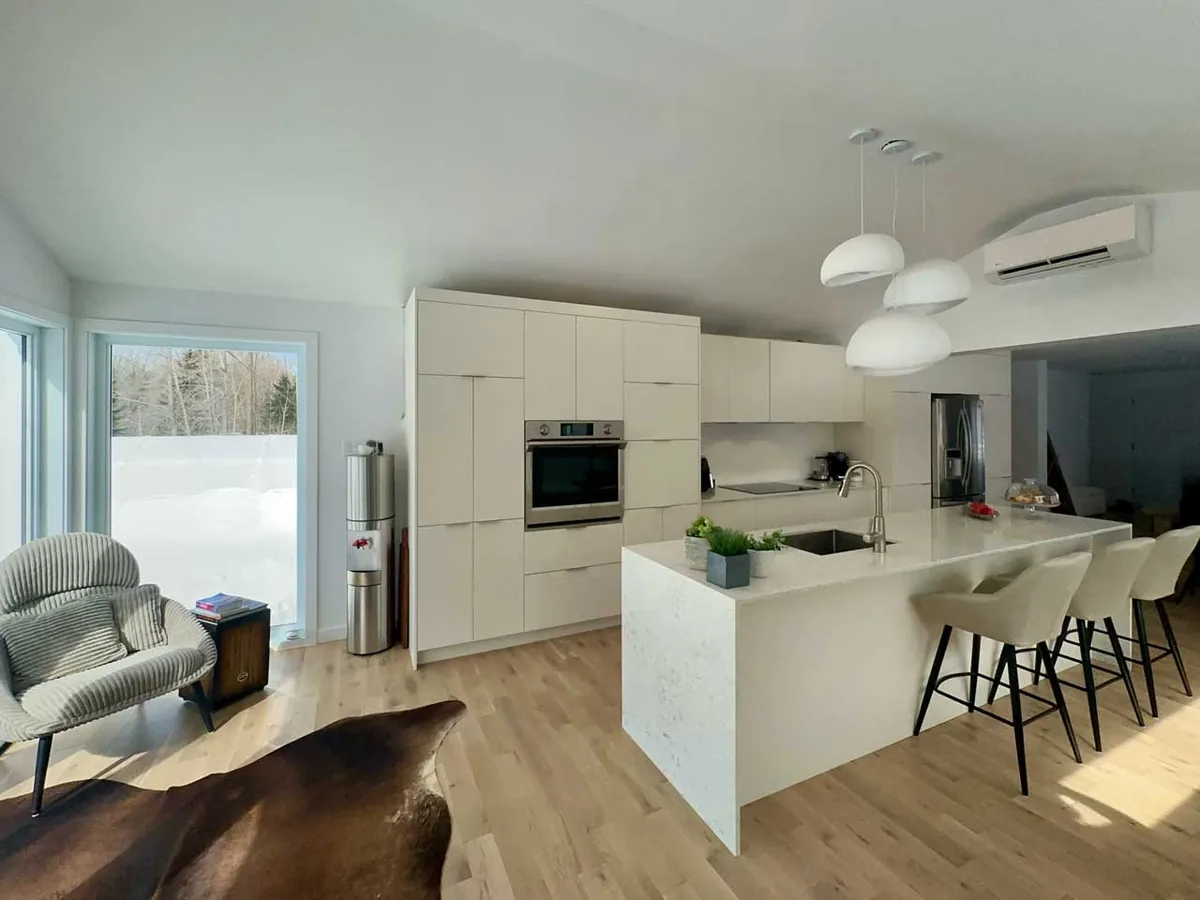
Templated off your cabinets
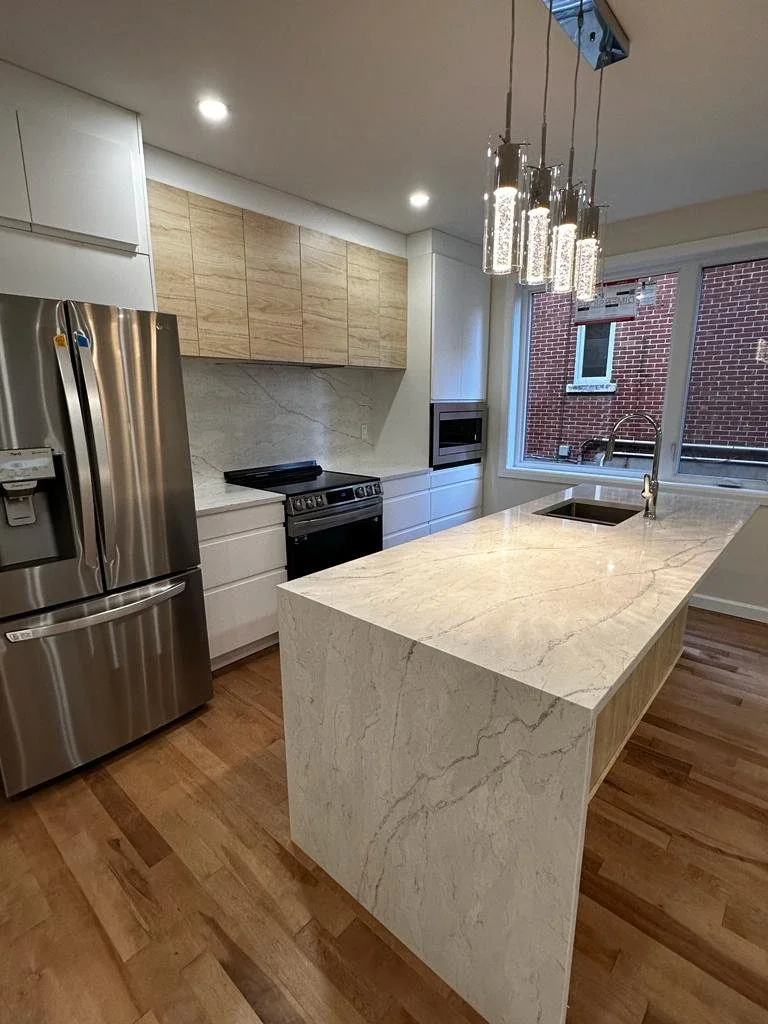
A countertop is the one part of a kitchen that cannot be adjusted afterwards. So it is measured last. The cabinetry is delivered, levelled and locked together first, then a template is taken off the boxes that are actually standing, and the slab is cut to that. Templating from a drawing is how you end up with a sink that is thirty millimetres off centre and a waterfall leg that does not line up with the panel below it.
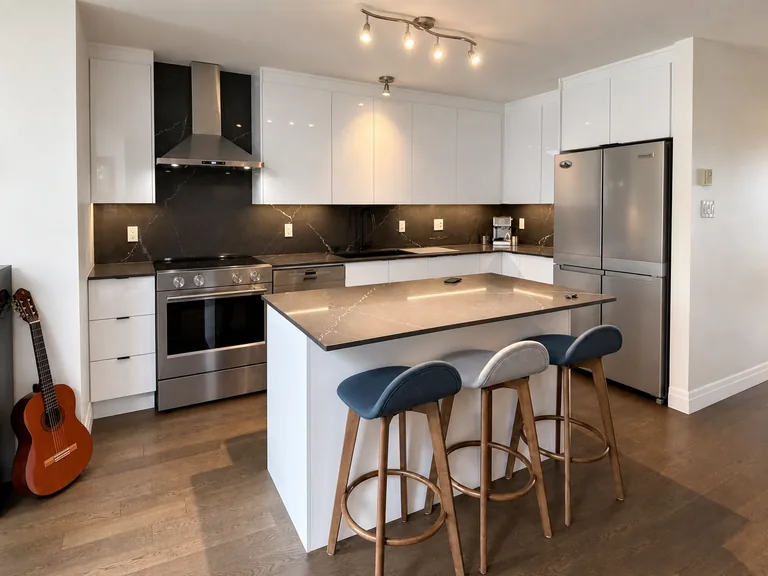
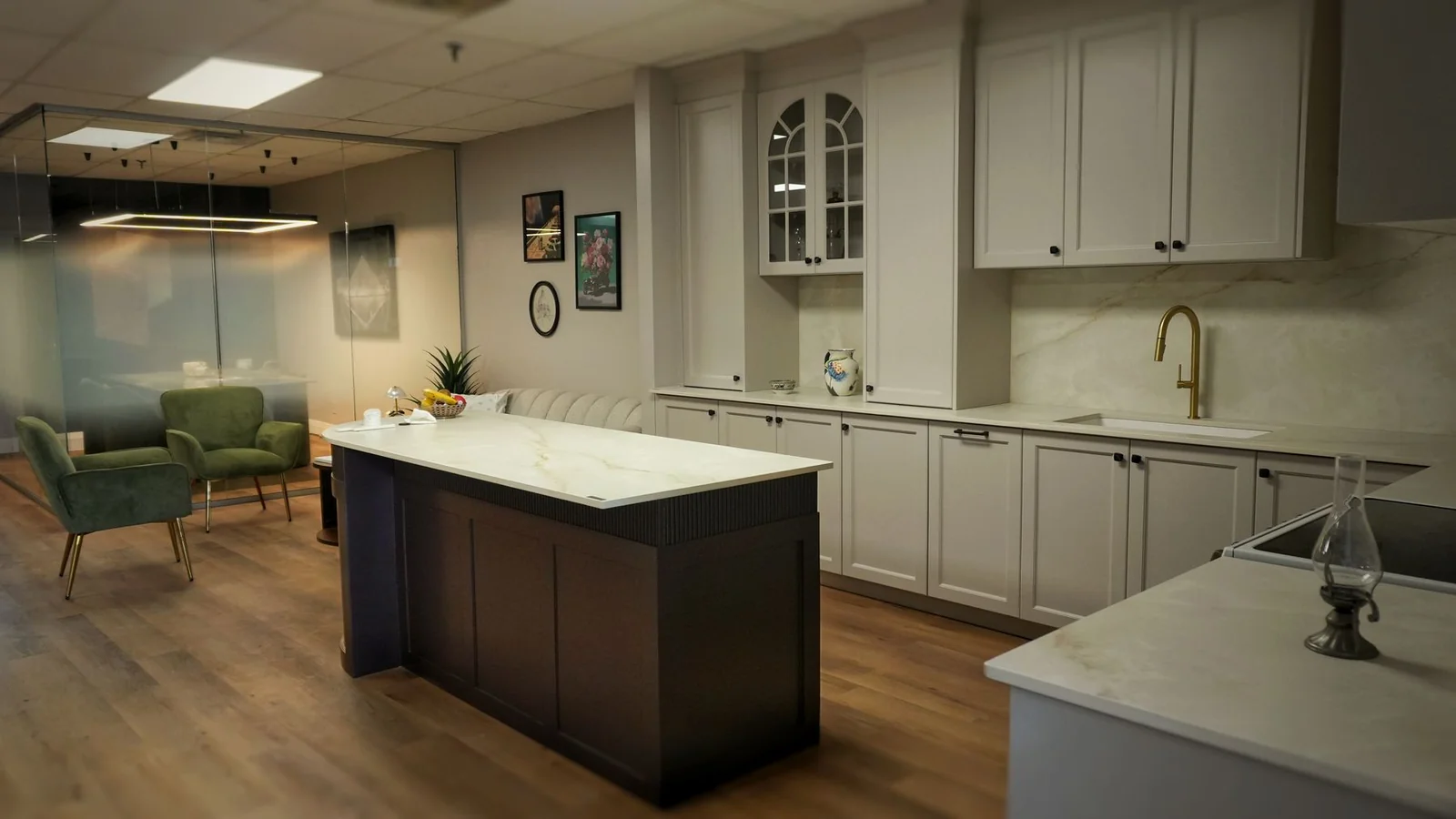
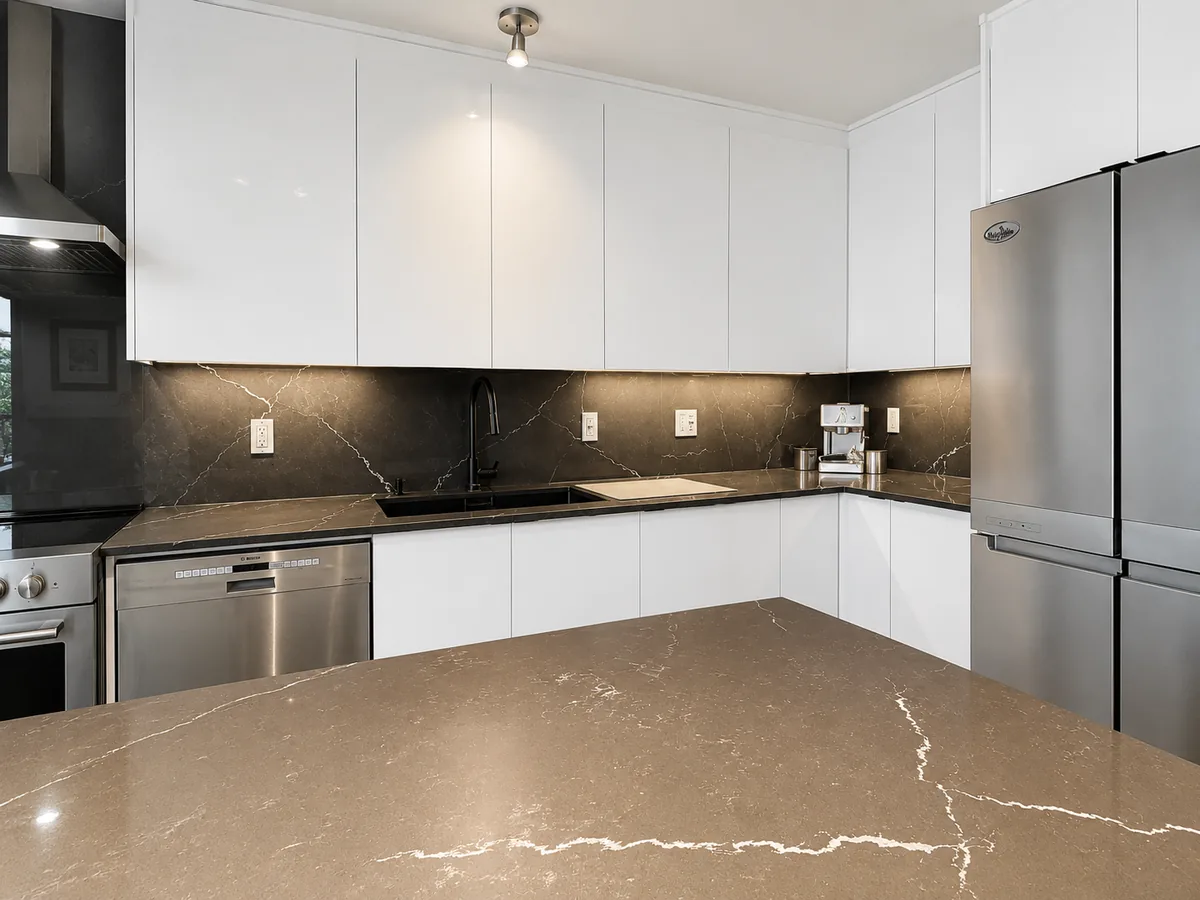
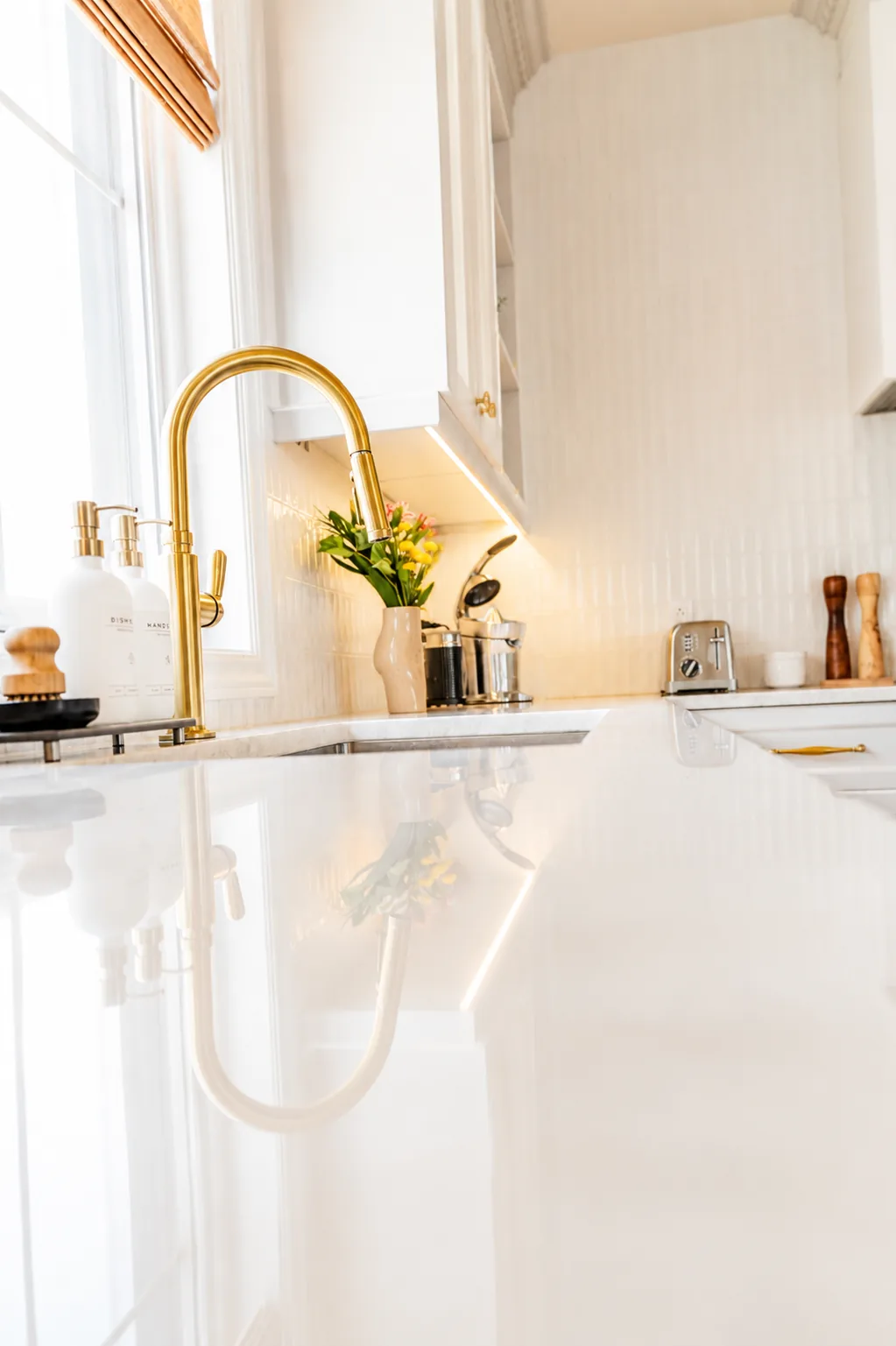
We supply and fit quartz, quartzite, granite, Dekton and porcelain. Quartz is engineered, so the pattern is predictable and the price is predictable with it, which is why most of the kitchens we build end up with it. Quartzite is natural stone, harder than marble and more interesting to look at, and no two slabs match. Dekton is sintered, which makes it the one to choose when the counter will take direct heat or sits outside. Porcelain is thin and light, which is what makes it useful on a wall or over an existing top.
The visible decisions are the edge, the seams and the sink. A twenty millimetre slab with a mitred edge reads as forty and costs less stone than a true forty. Seams are placed where the eye does not travel, usually over a cabinet division and never through a sink cut out. Undermount sinks are cut in the shop; farmhouse sinks change the cabinet below them and have to be decided before the cabinetry is drawn, not after it.
Choosing between the four
- Quartz for a consistent pattern, a wide colour range and a predictable price. Not for a spot where a hot pan lands straight from the oven.
- Quartzite for natural veining and real hardness. Expect variation between slabs, and expect to choose your own.
- Dekton for heat, ultraviolet light and outdoor kitchens. Hard, and it wants careful handling at the edges during fabrication.
- Porcelain for full height backsplashes and thin profiles, especially where weight matters on an upper floor.
Where the seams go
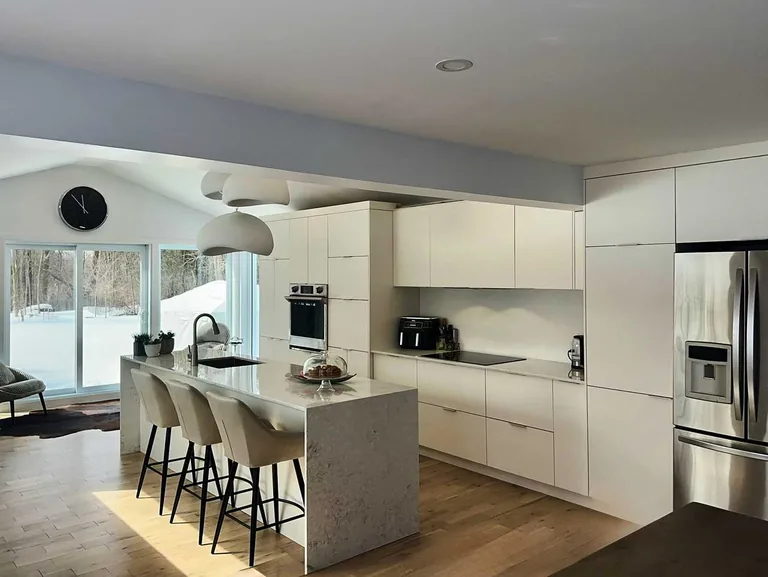
Slabs come in a fixed size, so any run longer than about ten feet has a seam somewhere. The question is where. We place it over a cabinet division, away from the sink and away from the cooktop, and we match the veining across it before the slab is cut rather than after. On an island with two waterfall ends the whole top is usually one piece with mitred corners, which uses more of the slab but leaves no joint on the surface anybody touches.