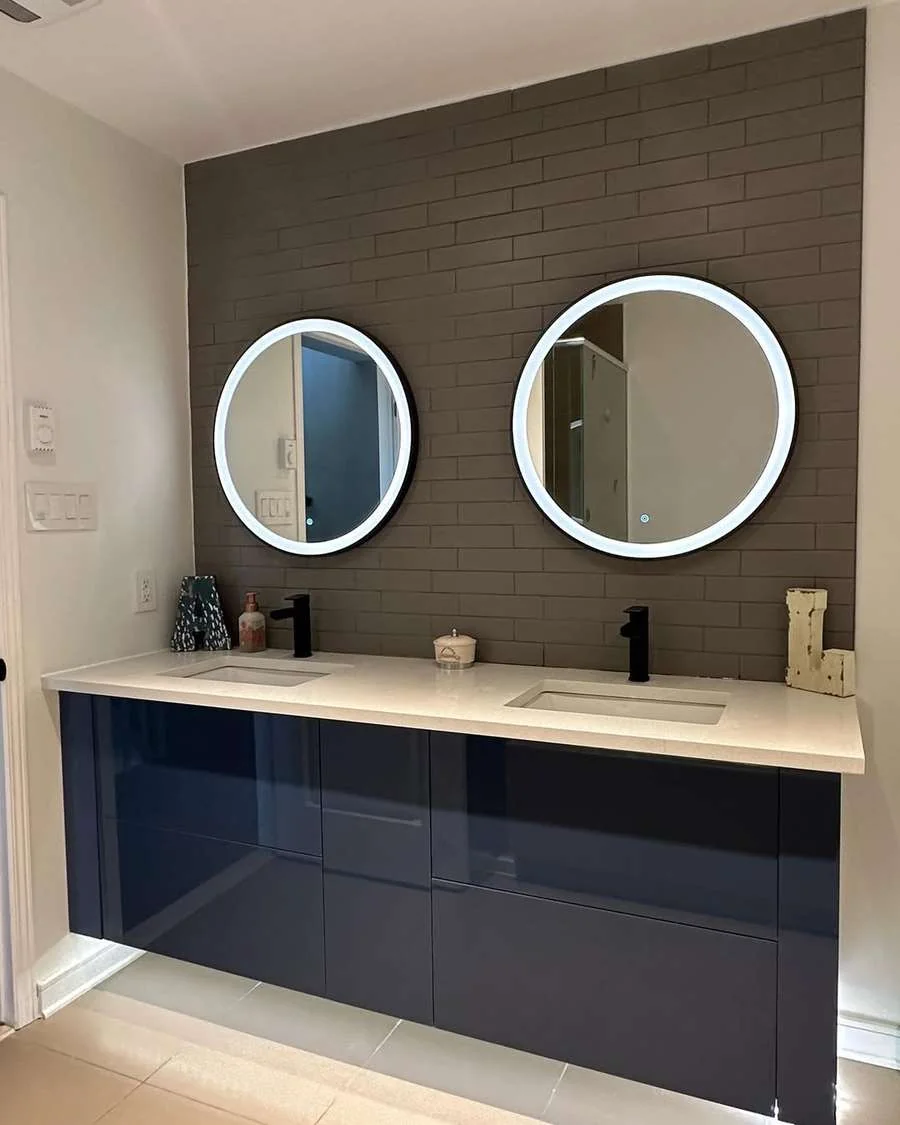
A small room, with harder conditions
A vanity is a kitchen in miniature with worse weather. Water lands on it, steam sits above it, and the plumbing runs straight through the middle of the cabinet instead of politely along the back. Everything that fails in a bathroom fails for one of those three reasons, so the way a vanity is built matters more than the way it looks, and both are decided at the same time.
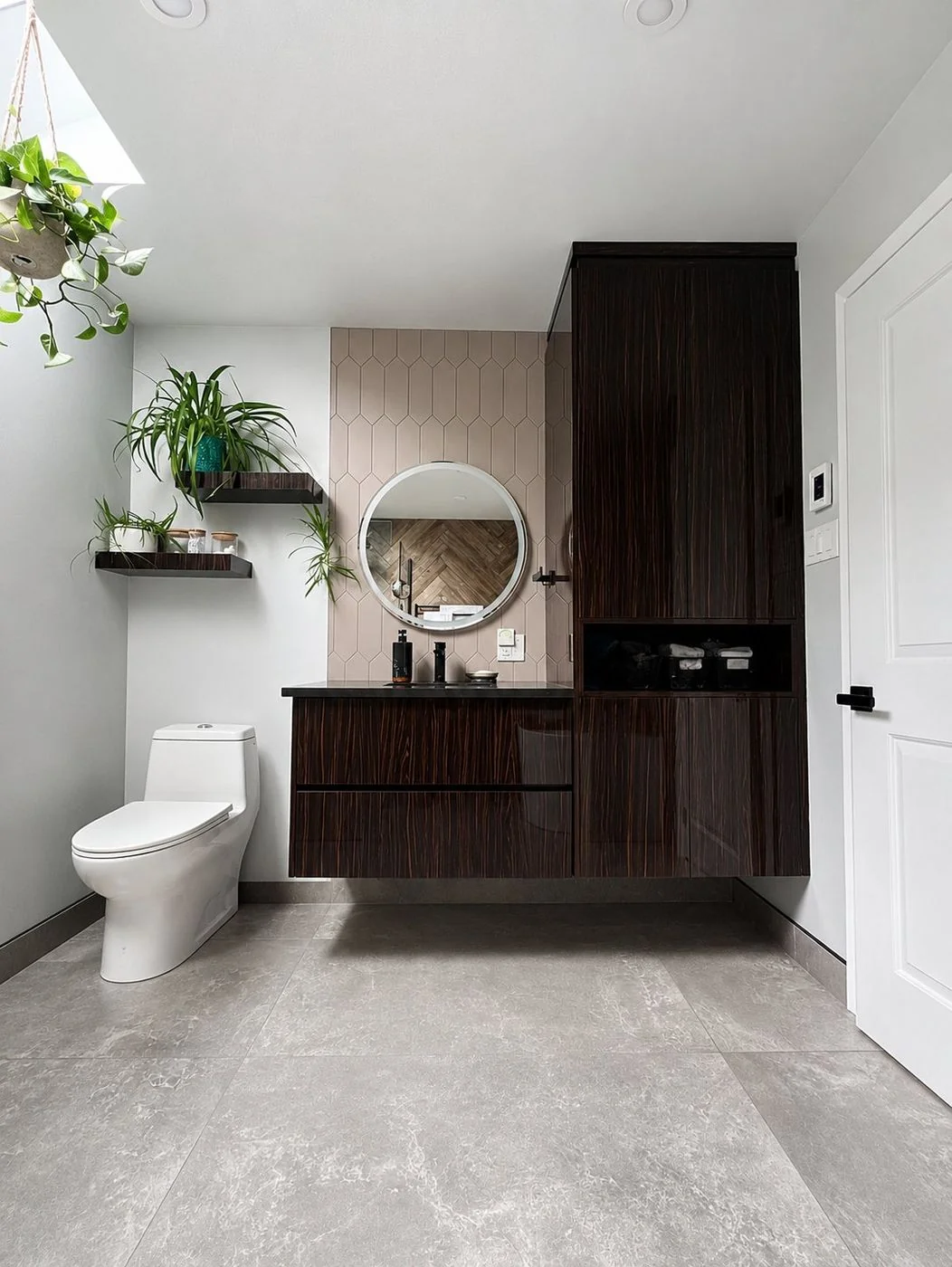
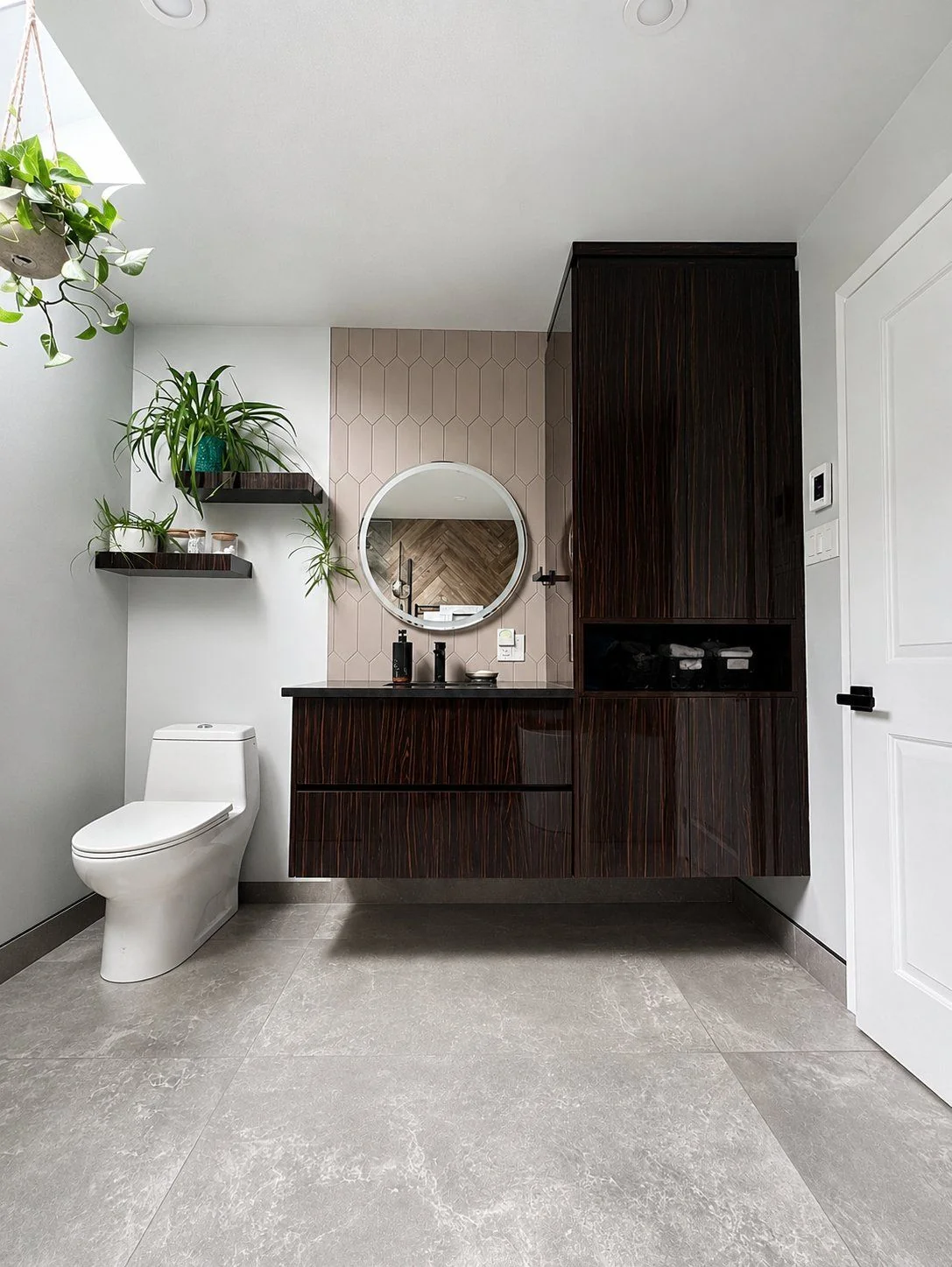
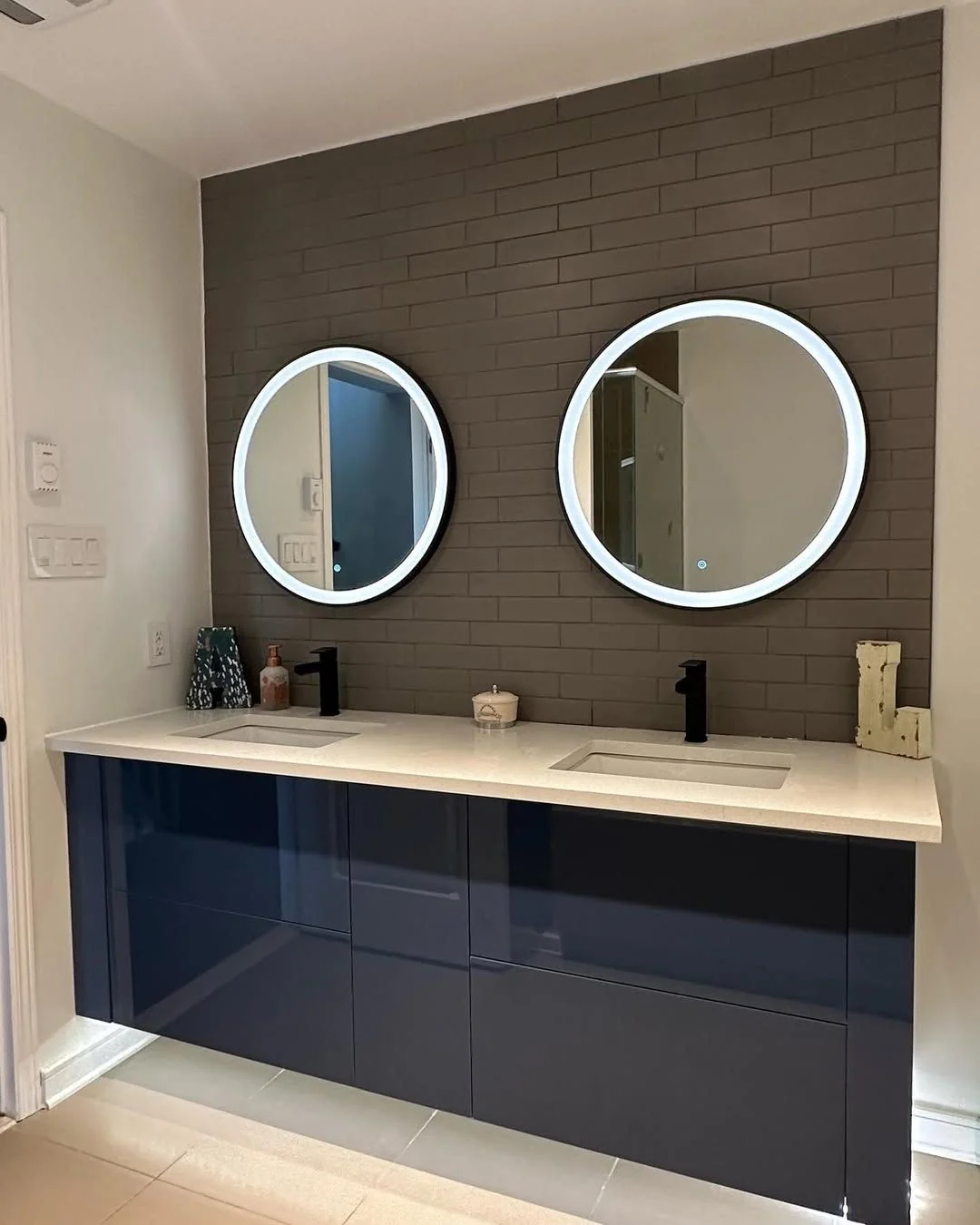
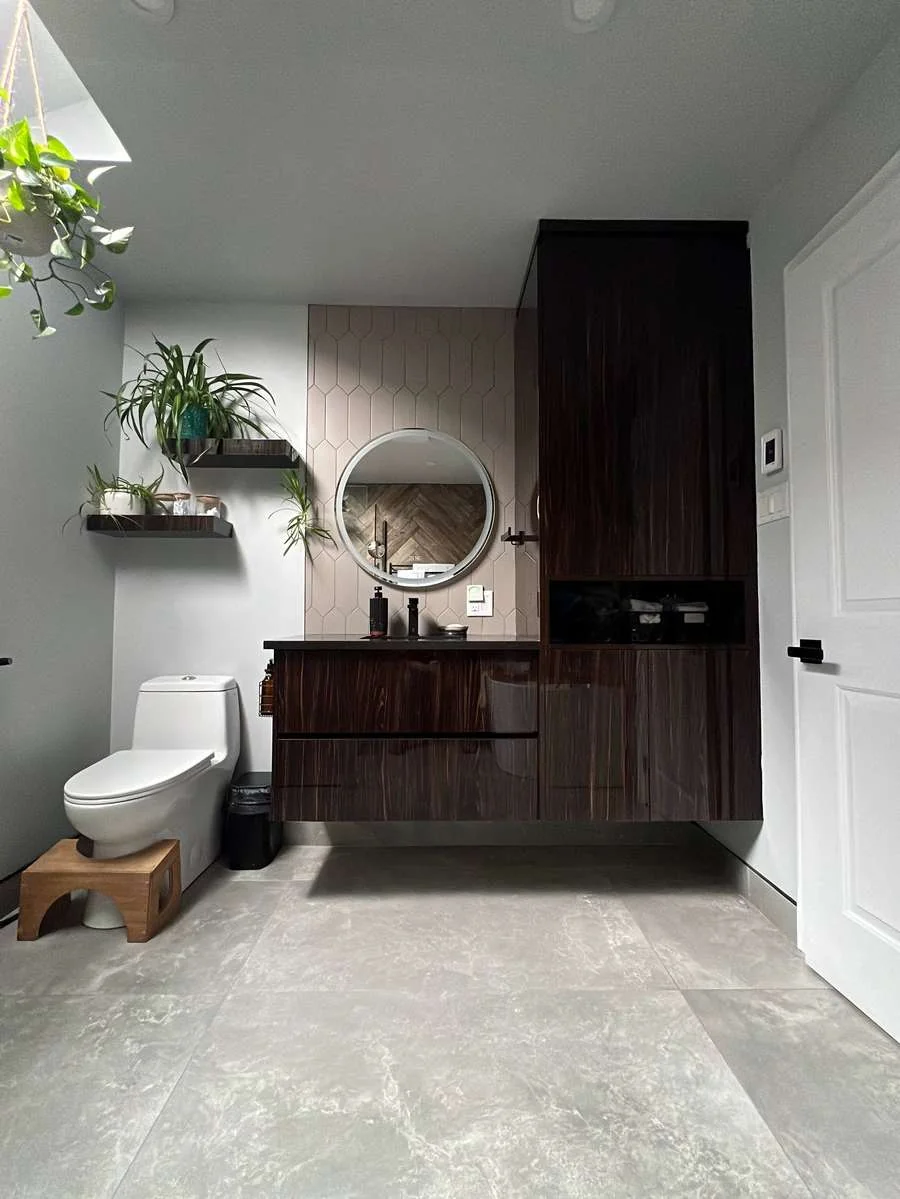
We build floating and floor standing vanities, single and double, with matching mirrors, storage towers, medicine cabinets and drawer interiors that are notched around the trap so a drawer can actually exist under the basin. Fronts are thermofoil, sprayed MDF, melamine in a wood grain, or a shaker frame, all of which tolerate humidity. Tops are quartz, quartzite, Dekton or porcelain with an undermount or integrated basin, templated after the cabinet is on the wall.
A floating vanity is the one people ask for most, and it is the one with a condition attached: the wall has to carry it. That means blocking behind the finished surface, decided before the tile goes on. Retrofitting support into a tiled wall is unpleasant work, so we ask about it at the measure and, where the wall cannot be opened, we draw a floor standing vanity on a recessed plinth instead, which reads almost the same from the door.
What we make
- Floating vanities, single or double, with drawers notched around the trap.
- Floor standing vanities on a recessed plinth or on legs.
- Storage towers and full height linen units.
- Mirror units, medicine cabinets and lit mirrors.
- Quartz, quartzite and Dekton tops with undermount or integrated basins.
- Powder room vanities where the whole cabinet is thirty inches wide.
The three measurements that decide everything
Where the drain leaves the wall, and at what height, decides whether the vanity can have a drawer or only a door. How the door of the room swings decides how far the cabinet can project. And the wall itself decides whether anything can be hung on it at all. We take those three before we talk about colour, because they are the ones that cannot be changed later without a plumber and a tiler. Once they are known, the rest of the decisions are pleasant ones.