Kitchen Cabinet Quality: A Montréal Showroom Checklist
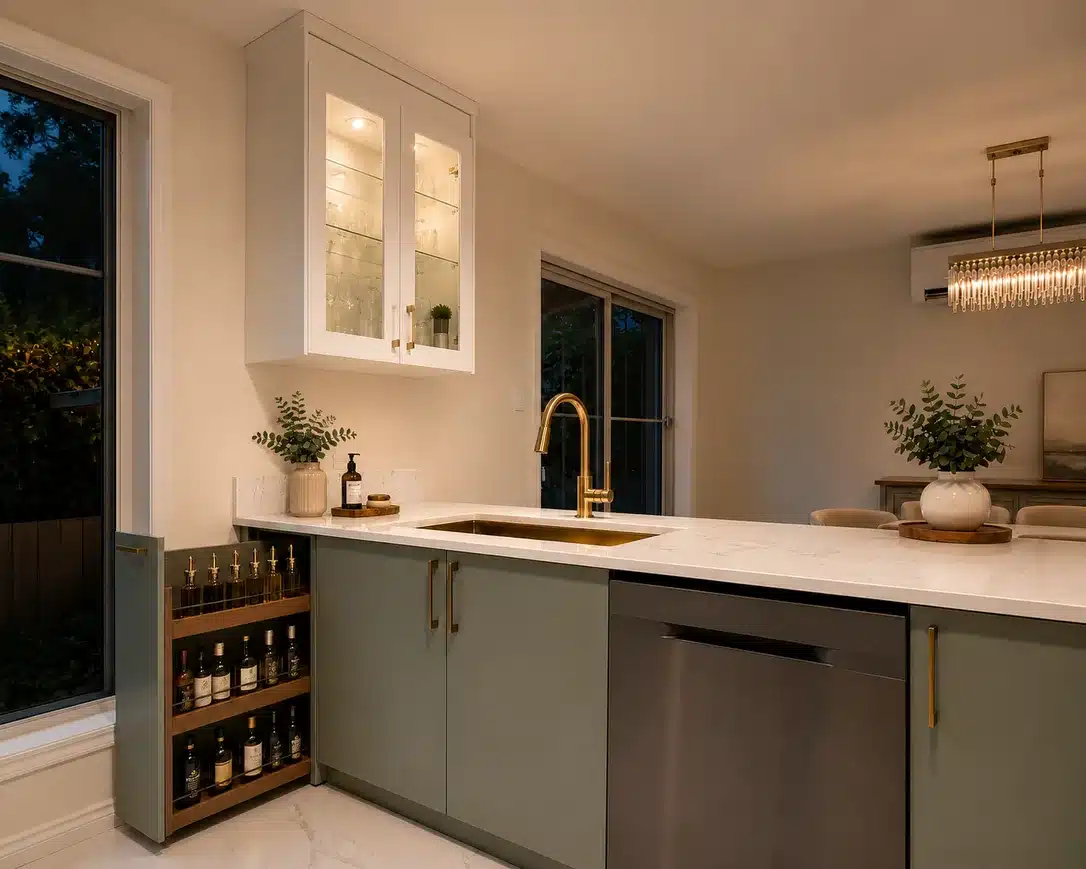
Two kitchens can look similar in photographs and feel very different when you use them. Before choosing cabinets, examine a working sample, ask what is specified and understand who is responsible for the installation.
The goal is not to find one feature that proves a kitchen is “high quality.” It is to check whether the construction, hardware and detailing suit the way you will use the room. If you are planning a complete kitchen renovation, make this review before comparing final quotations.
1. Ask what the sample represents
Find out whether the showroom display uses the same cabinet box, door finish, runners and hinges as your quotation. A beautiful display is useful only if you understand the differences between it and the product being offered.
Request the specification in writing. Separate the cabinet box from the door and from its surface finish. A painted door, for example, does not tell you what the box is made from. Material names alone are not a complete quality assessment. Our comparison of MDF, melamine and thermofoil explains how these layers differ.
2. Look at the details you usually cannot see
Open the doors and examine exposed edges, corners and the back of the cabinet. Ask how the box is assembled, how shelves are supported and how the cabinet is secured during installation.
Look for a consistent finish at visible joins and around door edges. Ask which cleaning products and moisture precautions apply to the actual finish. Do not treat any cabinet as waterproof simply because its visible surface wipes clean.
A showroom inspection is a useful conversation, not a laboratory test. The supplier should be able to explain the construction without expecting you to judge it from a photograph.
3. Try the drawer as storage
Open a drawer completely and check how easily you can reach the back. Compare internal drawers behind a door with drawers that open directly. Both can work, but the number of movements matters when you repeat them every day. Our guide to small kitchen storage planning compares drawers and shelves by task.
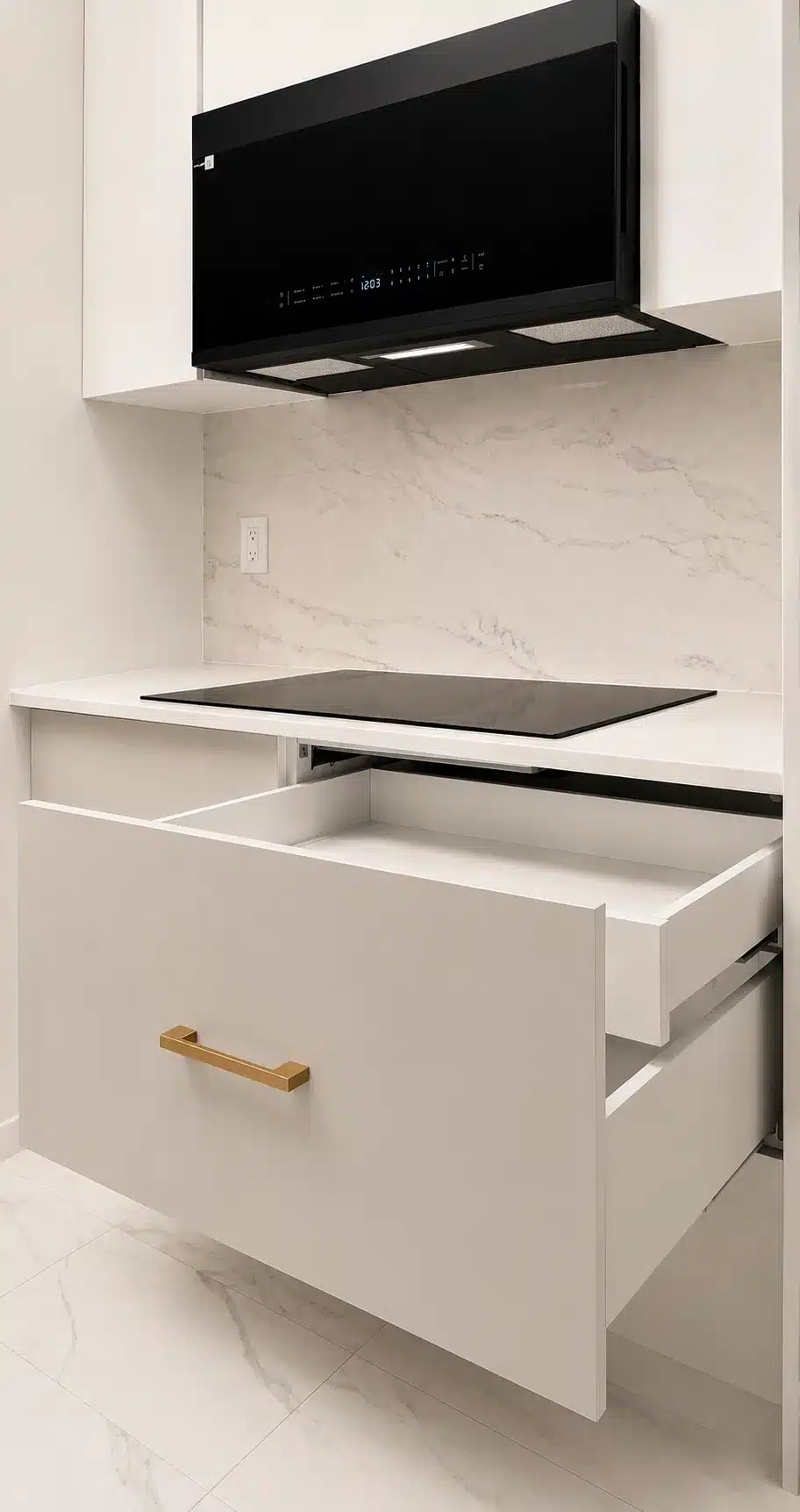
Soft closing describes one function. It does not specify the runner’s extension, load class or suitability for your planned contents. Blum’s TANDEM range, for example, includes different extension options. Ask for the exact hardware specification instead of relying on a brand name alone.
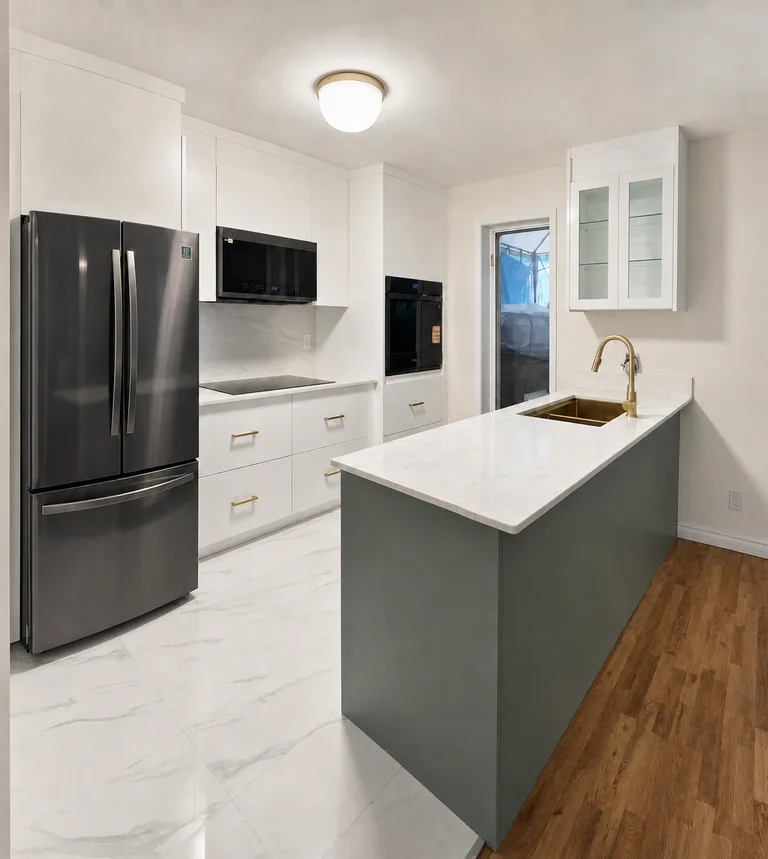
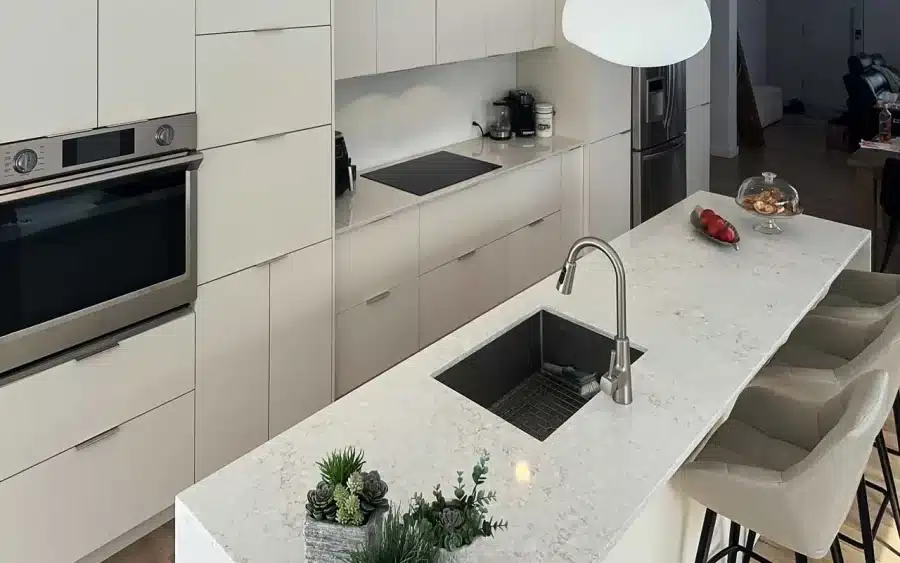
Our Pointe-Claire kitchen includes internal drawers. Use the project as a prompt to discuss access, then try an appropriate sample yourself.
4. Check the opening details
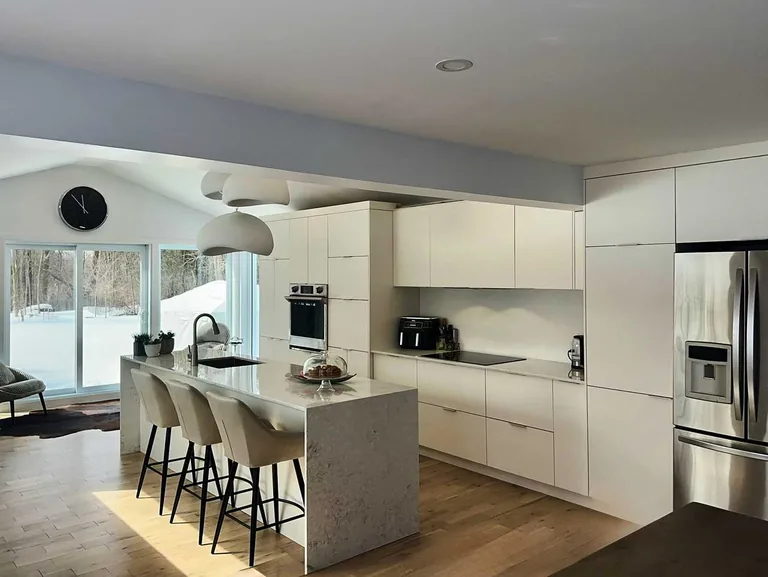
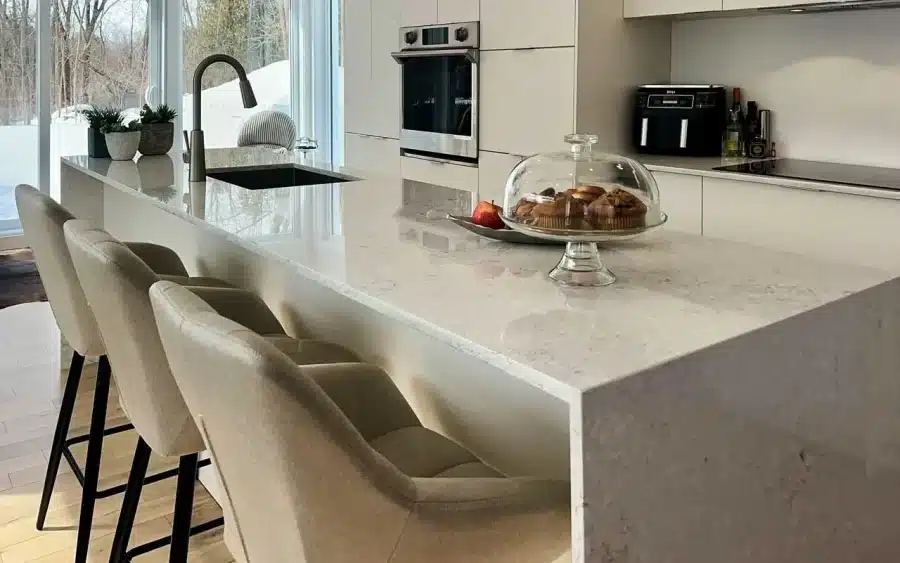
Open adjacent doors and drawers together where the display allows it. Notice handle positions, corners and the space your hand needs. For handleless cabinetry, ask which opening mechanism is included and try it with the kind of movement you find comfortable.
Check how adjustments and replacement parts will be handled. A practical answer includes who you contact after installation and how a hardware problem is assessed. Do not assume that every component has the same warranty.
5. Include installation in the comparison
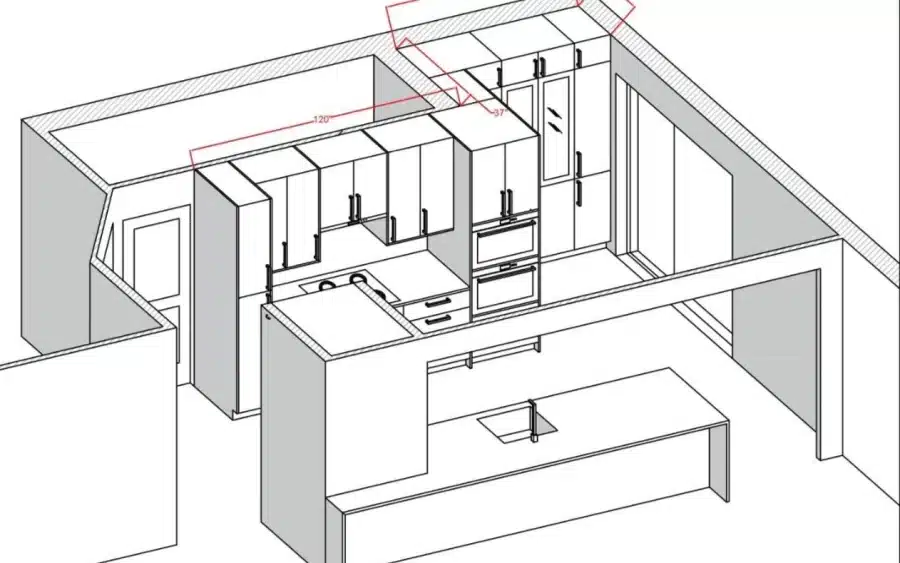
Ask how uneven walls and floors will be handled, where fillers and finishing panels will appear, and what adjustments are included at completion. The drawing should make these details understandable.
A cabinet specification and an installation specification solve different problems. Our kitchen installation guide explains the fitting stage. When reviewing a proposal, confirm who takes final measurements and who resolves a mismatch between drawings and site conditions.
Take these questions to the showroom
Ask whether the display matches your quote, what each main component is, how the drawers open, which care instructions apply and who handles follow-up. Record the answers beside the drawing revision and finish sample.
For price comparisons, use the same layout and inclusions. Our quotation checklist helps keep that comparison consistent.
Does plywood automatically make a better kitchen?
No single material label describes the entire assembly, its suitability or the installation. Compare the specified components and the complete design. The same applies to labels such as stock, semi-custom or custom.
Does soft close prove the drawer is suitable for heavy cookware?
No. Confirm the selected runner, drawer construction and intended loading.
Explore our custom kitchen cabinetry and contact Limakdéco to arrange a Saint-Laurent showroom visit. Bring photographs and your renovation scope so the discussion relates to your kitchen.
Our showroom and workshop are in Saint-Laurent.