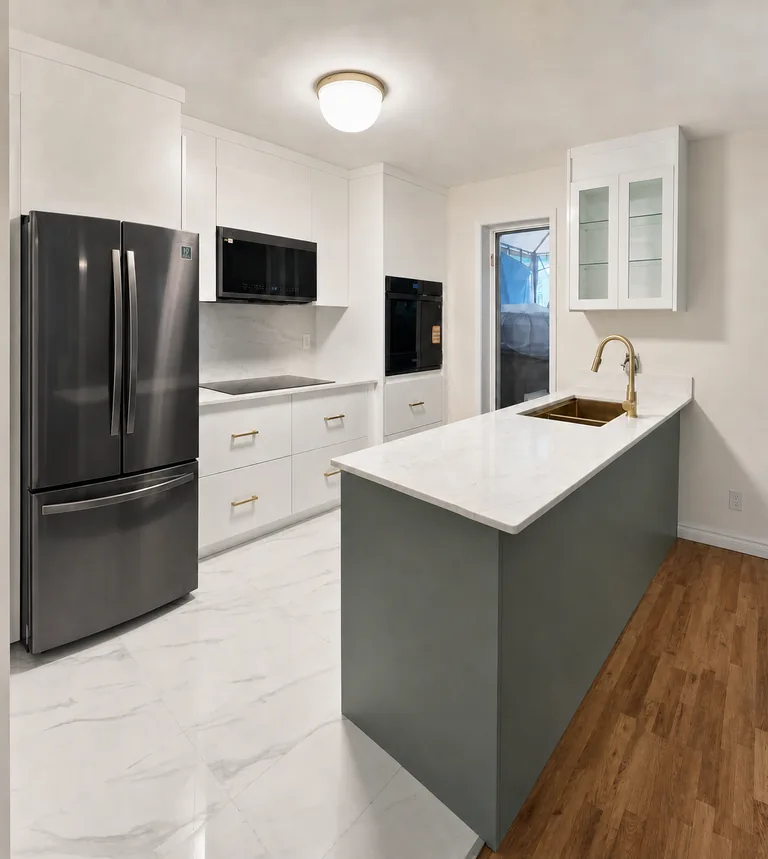
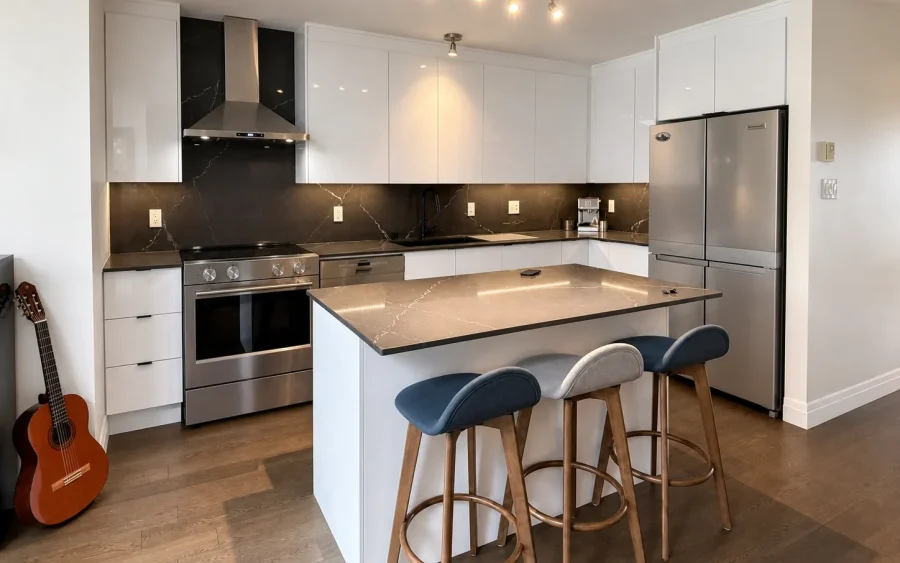
Kitchen Design in Montréal: What to Check in Your 3D Plan
A useful kitchen design does more than show the colour of the doors. Before you approve fabrication, you should be able to explain where you will prepare food, how the appliances open and where the things you use every day will go.
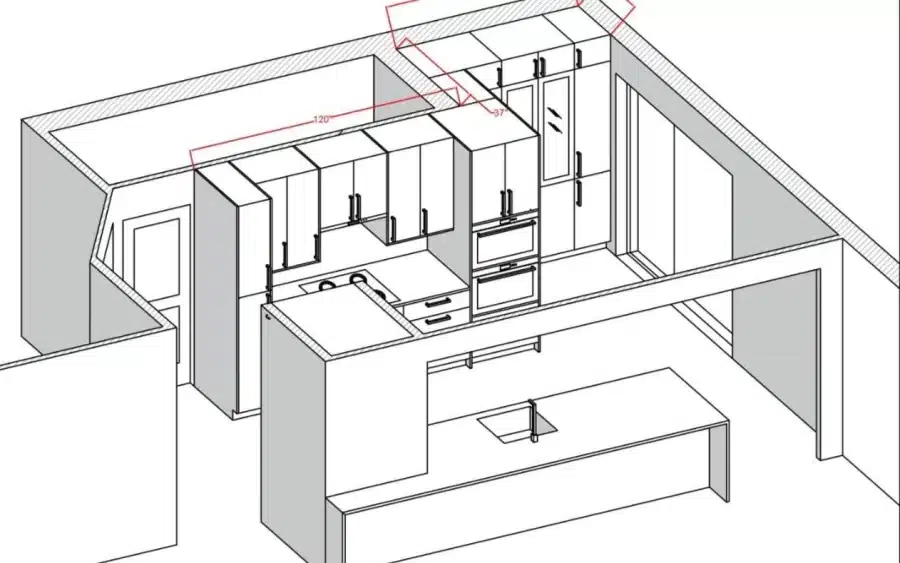
A 3D view helps you picture the room. The measured plan, elevations and written specifications explain what will actually be built. Reviewing these together is an important part of a complete kitchen renovation.
Start with the room that exists
Confirm that the drawing reflects the current site measurements. Windows, door trim, ceiling changes, radiators and columns can affect the layout. Ask which measurements are final and which depend on work that has not happened yet.
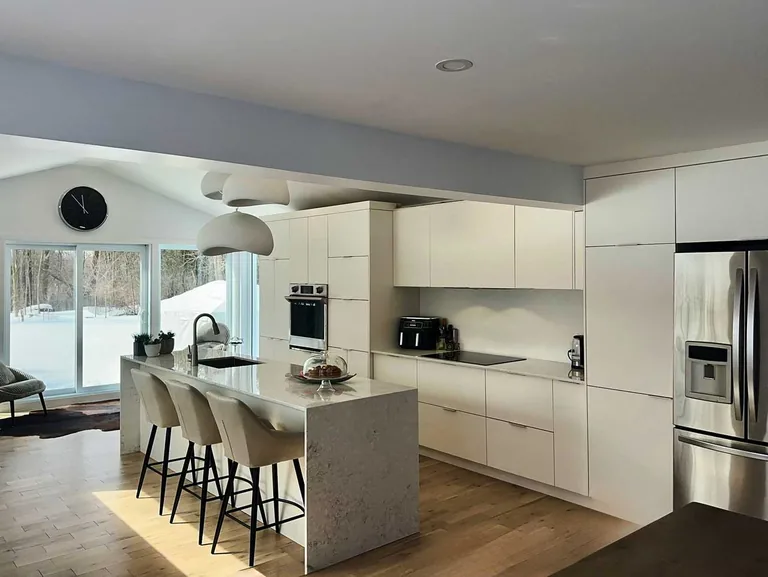
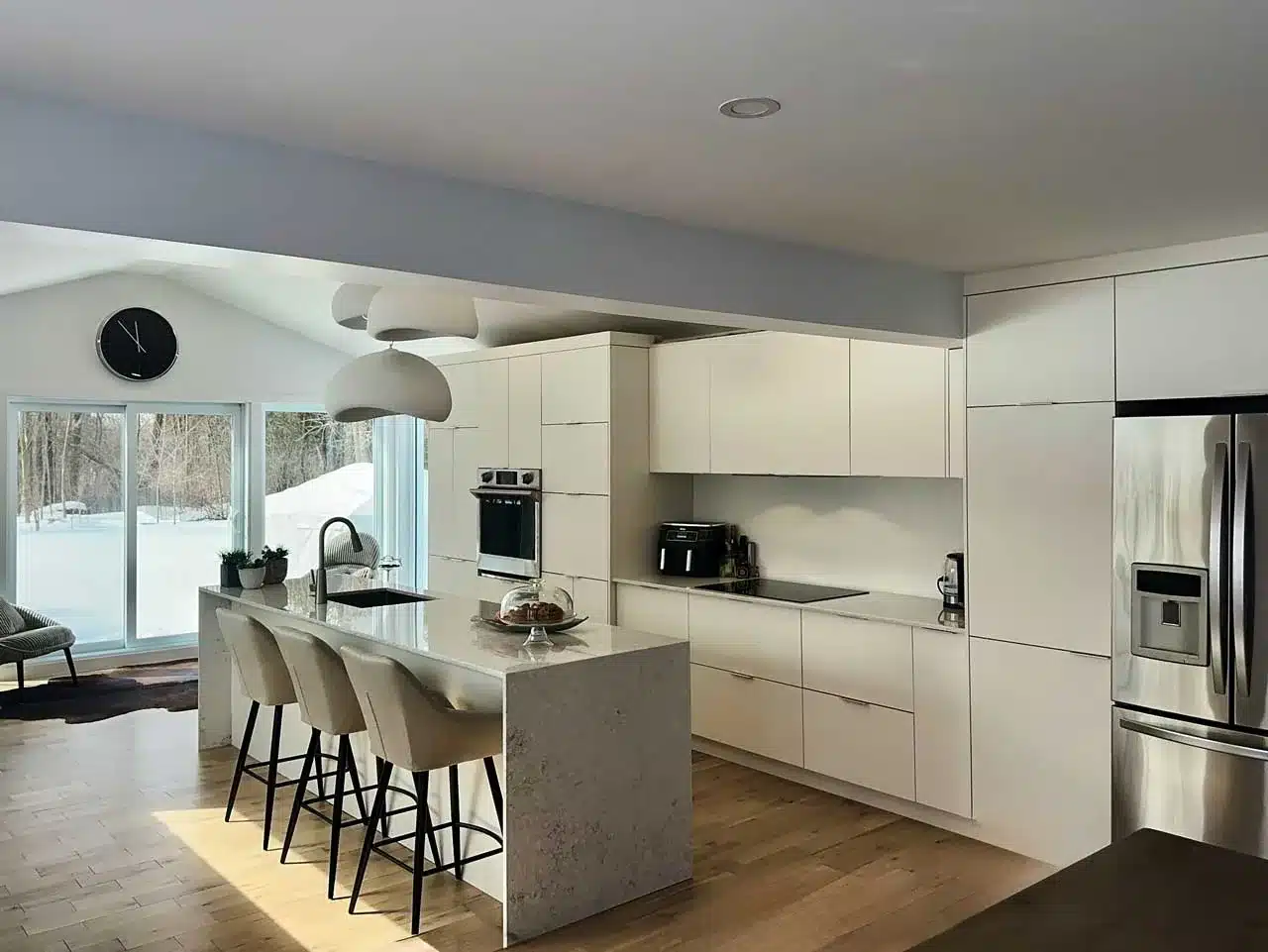
In our Laval waterfall-island project, a column affected the design before fabrication. The lesson is practical: a constraint belongs on the plan while there is still time to work around it. A rendering cannot confirm what is hidden inside a wall or ceiling.
Open the appliances on the drawing
Have the exact appliance models recorded, including any required panels. Overall appliance width is only one part of the check. The installation instructions also govern openings, ventilation and access.
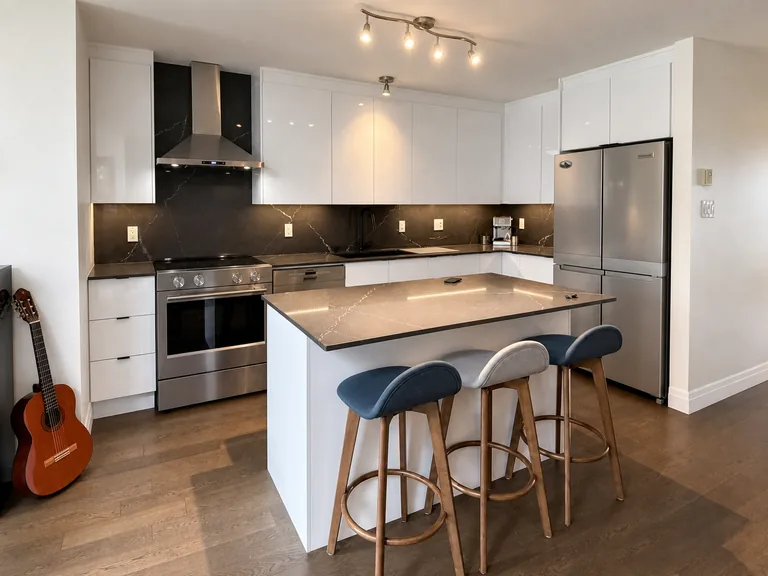
Imagine unloading the dishwasher while someone uses the sink. Check the refrigerator doors beside a wall, oven access beside the island and drawers that open toward each other. Ask the designer to show the circulation with doors open, not just the attractive view with everything closed. Clearances should suit the equipment, users and applicable requirements. If you are still deciding on an island or peninsula layout, draw both options with the doors open.
Give storage an address
Write down what belongs in each cabinet. Pots need a different space from baking sheets; everyday dishes should not require a stepladder. Plan waste and recycling where they can be reached during preparation and cleanup. Our guide on how to plan usable kitchen storage starts from the same list.
For a pantry, compare what you can reach with a shelf against an internal drawer. Check the usable opening and the space taken by hinges or runners. A large cabinet shown in a rendering may hold less than you expect once its internal fittings are specified.
Read the elevations as well as the perspective
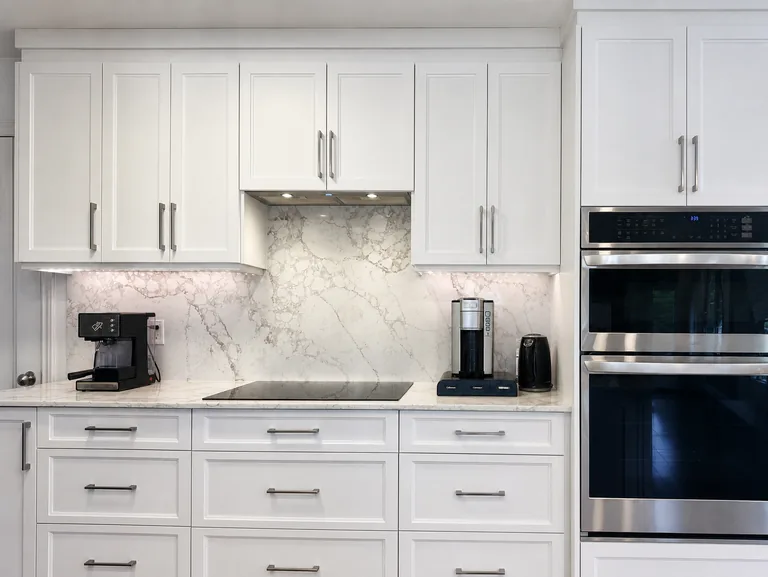
Elevations show the cabinet runs straight on. Use them to review heights, end panels, fillers, lighting locations and the relationship between upper cabinets and the ceiling.
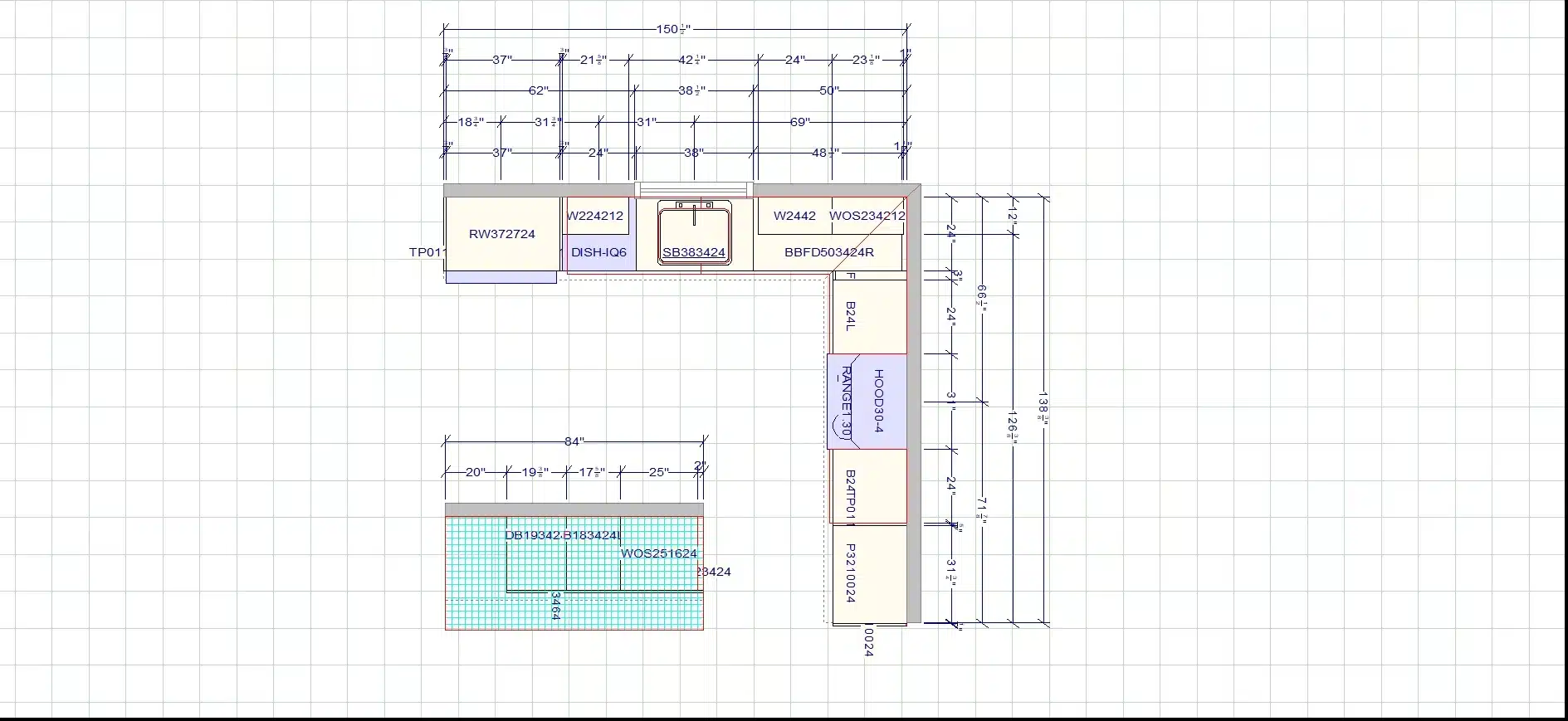
Fillers and scribed pieces can be intentional parts of fitting cabinetry to a real building. The useful question is whether their purpose and appearance are clear. Ask to see a sample when a drawing cannot explain an edge, finish or opening detail. Our cabinet quality checklist explains what to look for when you examine a sample.
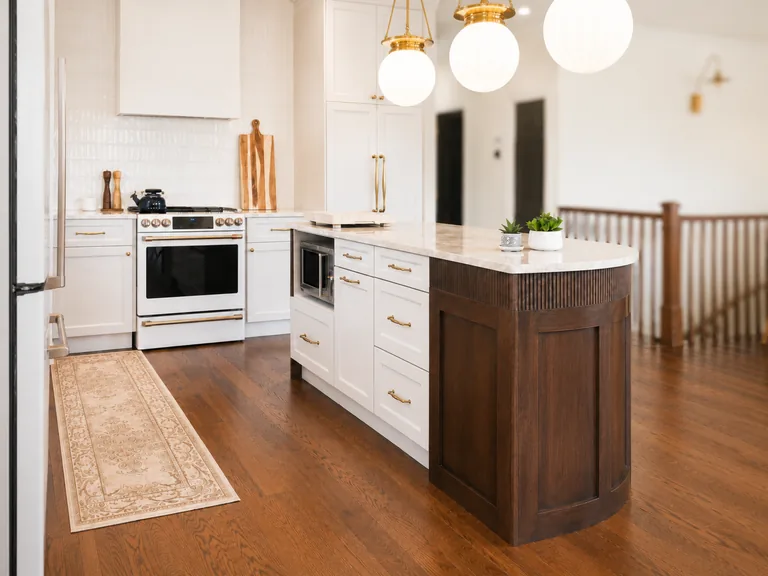
Compare door and countertop samples together in appropriate lighting. A screen is helpful for composition but cannot guarantee the final colour or the veining of a particular slab. To see how door styles read in finished rooms, our kitchen styles page compares five kitchens we built.
Connect approval to a written scope
Before signing, check that the drawing revision matches the quotation. List what has changed since the first concept and whether each change affects the price or sequence.
Your approval checklist should include:
- The final layout and drawing revision.
- Appliance model numbers and required openings.
- Cabinet interiors, opening mechanisms and hardware.
- Door, panel, countertop and backsplash selections.
- Responsibility for plumbing, electrical work and site preparation.
- Any unresolved site condition and who must confirm it.
Our quote comparison guide explains how to connect design choices to the written scope.
Questions to ask before moving forward
Is a 3D image a construction drawing?
It can communicate appearance, but it does not replace dimensions, specifications or the drawings required for the work.
Can the design still change?
Ask when each decision becomes a production commitment. A revision before fabrication is different from a change after materials have been ordered.
What should I bring to a consultation?
Bring room photos, an approximate sketch, appliance information and the three things that frustrate you most. Site measurements still need professional verification.
If you are planning a kitchen in Montréal, the West Island or Laval, explore our design and 3D planning service and custom cabinetry. Contact Limakdéco to discuss the whole project at our Saint-Laurent showroom.
Our showroom and workshop are in Saint-Laurent.